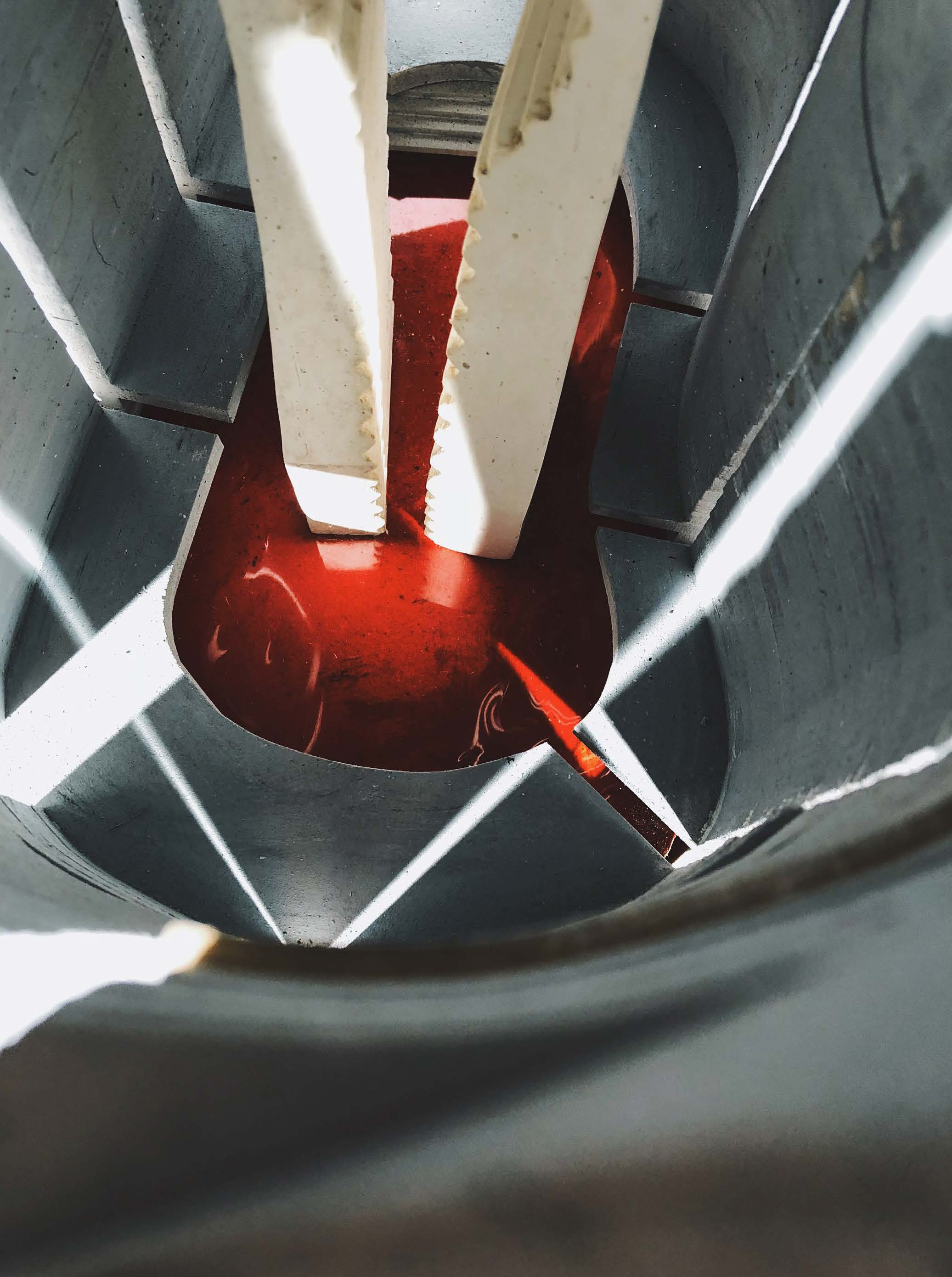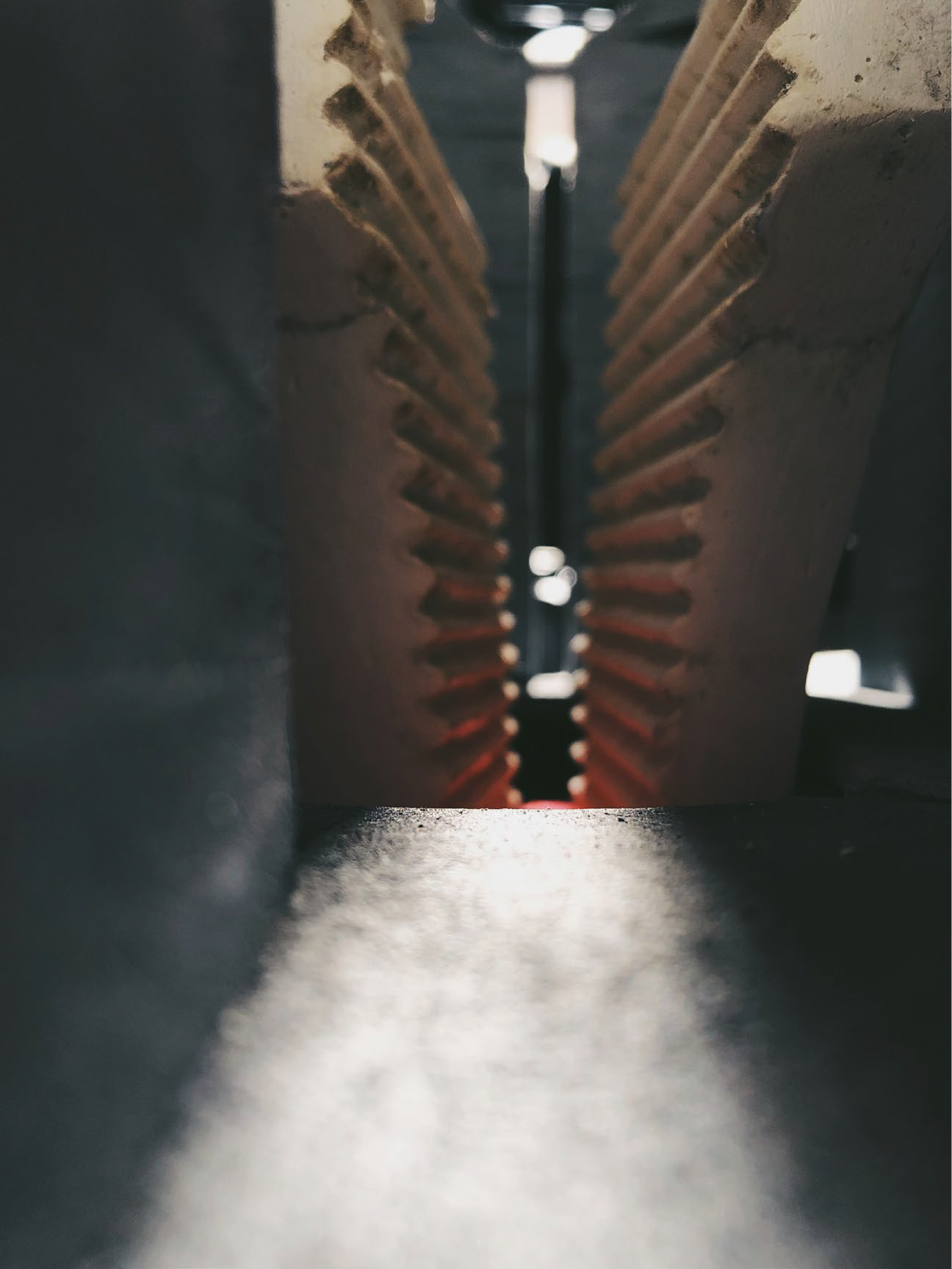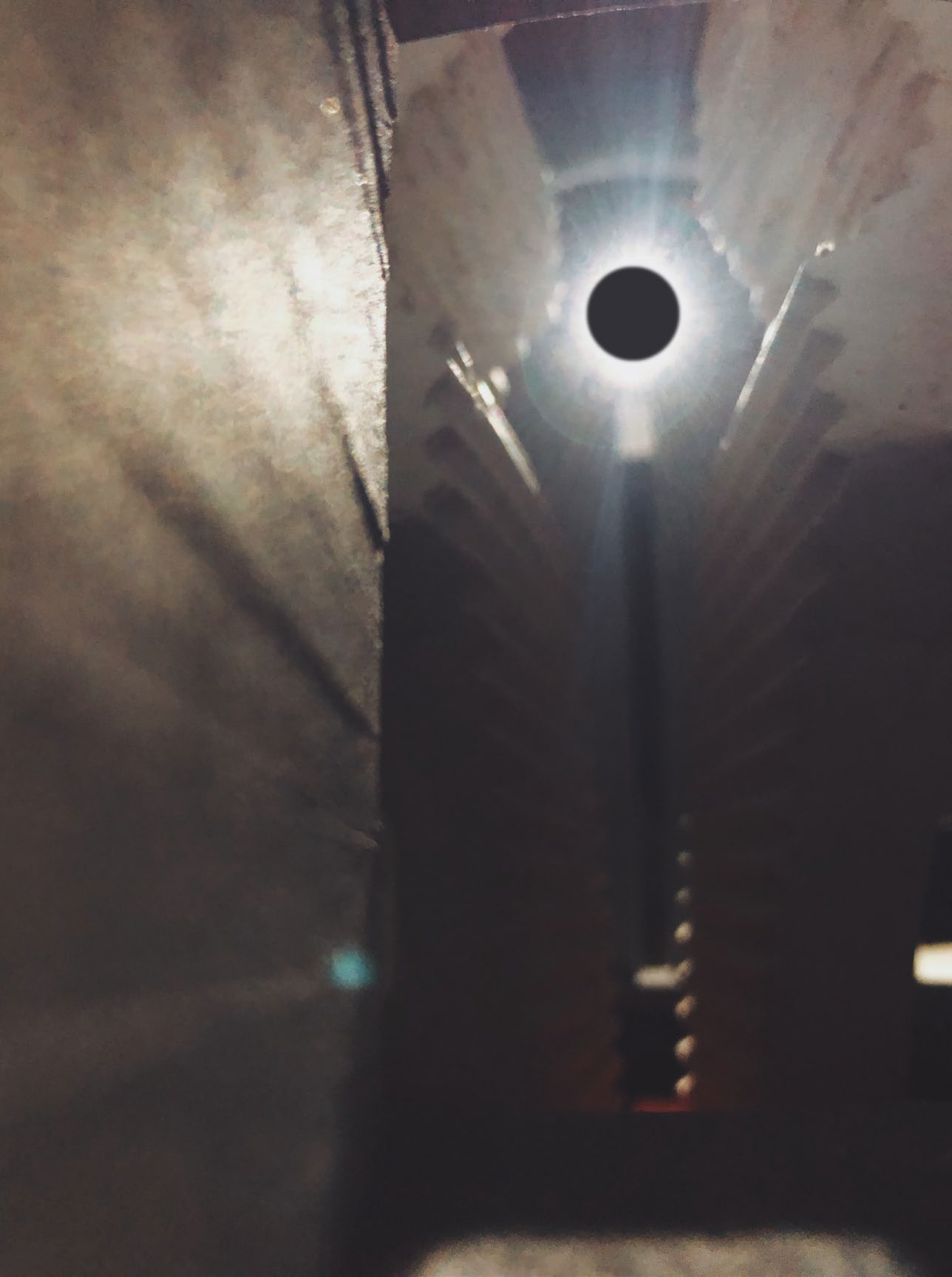
"The act of mourning and the act of survival become the same gesture."
Memory Eternal is a futuristic project set in the aftermath of a speculative World War 3. The design adapts a Protestant church in Brighton, UK, for a new form of religion based on Paganism, envisioning the repurposed space as a sanctuary for a total solar eclipse predicted to be visible from Brighton in 2090.
The site serves simultaneously as a memorial to World War 3. Its central ritual is the cultivation of red algae, grown in memory of the dead, and harvested as a source of sustainable oil and energy. The act of mourning and the act of survival become the same gesture. The living tend to the dead, and the dead sustain the living.
The eclipse becomes the culminating ritual event — a moment of total darkness that the architecture is designed to hold, channel, and mark. The red algae, in full growth by 2090, surrounds the church as both garden and fuel source.
Developed within the Near Futurist Alliance studio at the University of Brighton, led by Gem Barton and Amelia Jane Hankin, this project marked my first encounter with speculative design as a method. While the concept was still in early development, the visual language became a strong entry point and revealed new ways of thinking through design. It opened an interest in using speculative approaches to explore future conditions of war, memory, and grief, and became the starting point of a longer ongoing investigation into what architecture and design owe to those who come after.
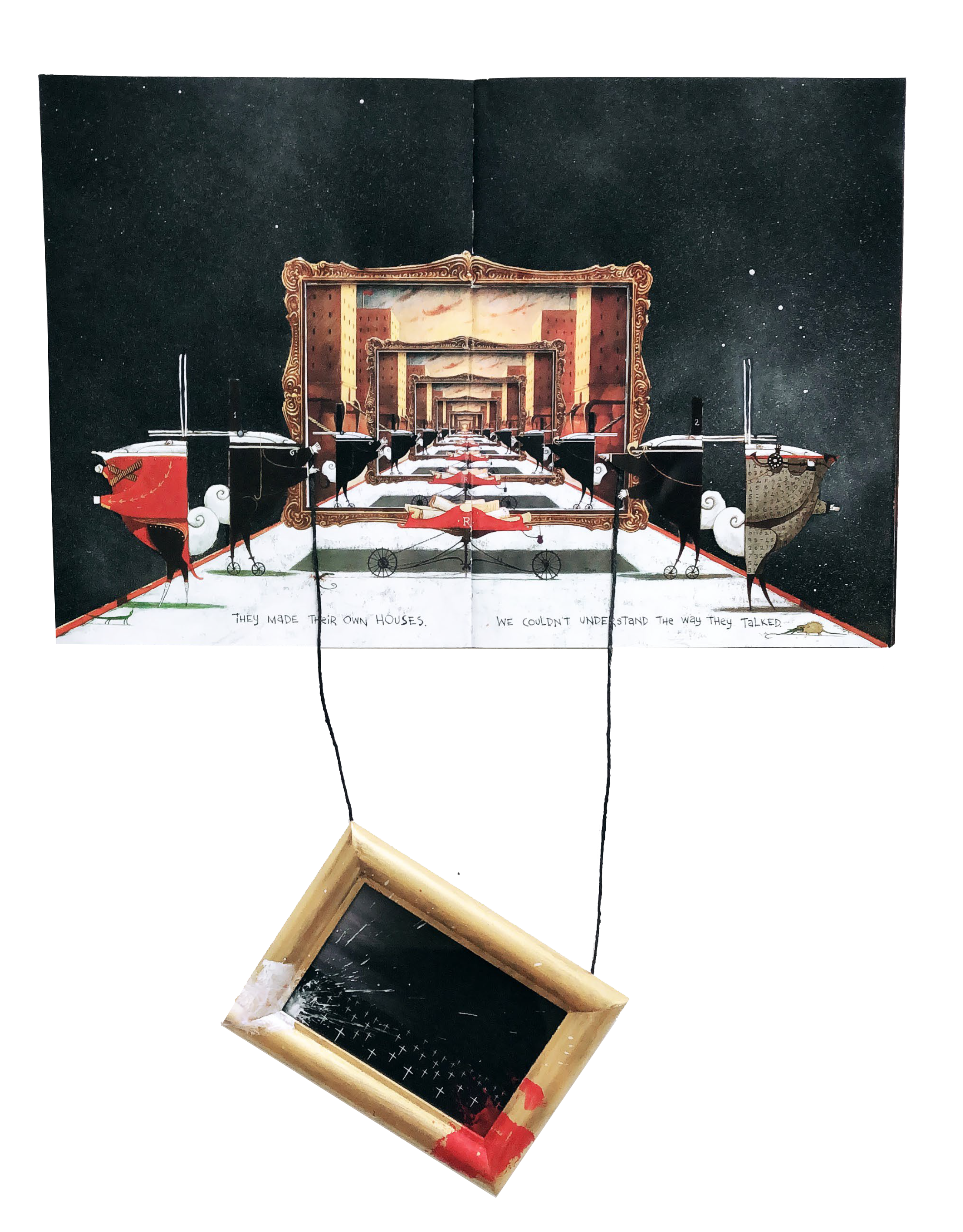
Using a found image from The Rabbits by John Marsden and Shaun Tan as a point of departure, this collage reinterprets the book's themes through a personal lens. The work explores recurring patterns of colonisation, power, and historical revisionism, questioning how collective memory is shaped and how societies continue to repeat narratives inherited from those who write history.
Architectural visualisations of a sacred site from Memory Eternal, a speculative religion centred on the observation of solar eclipses. The sanctuary serves as both a place of worship and a memorial, bringing together ritual, remembrance, and collective mourning.
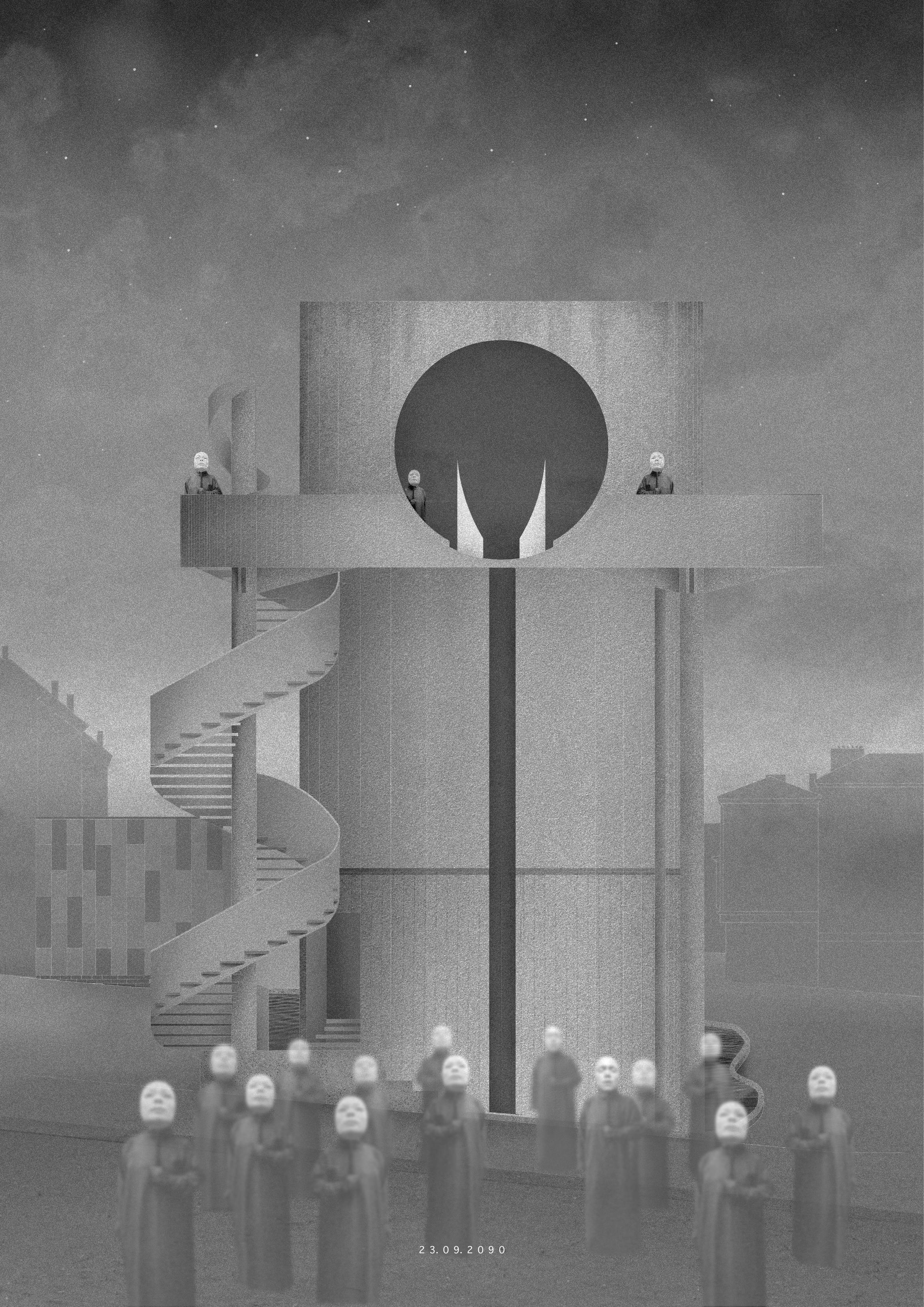 Front Elevation
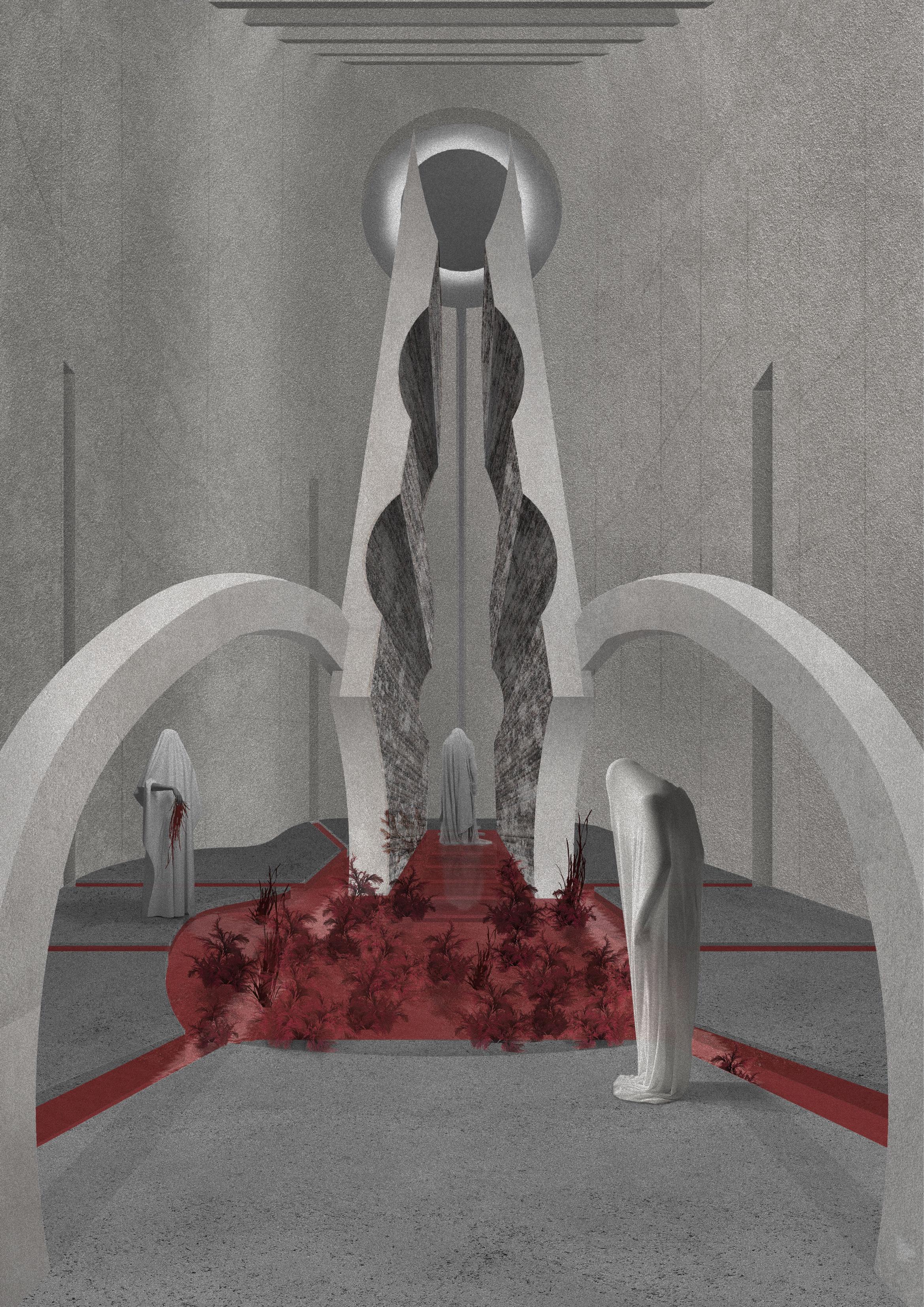 Interior
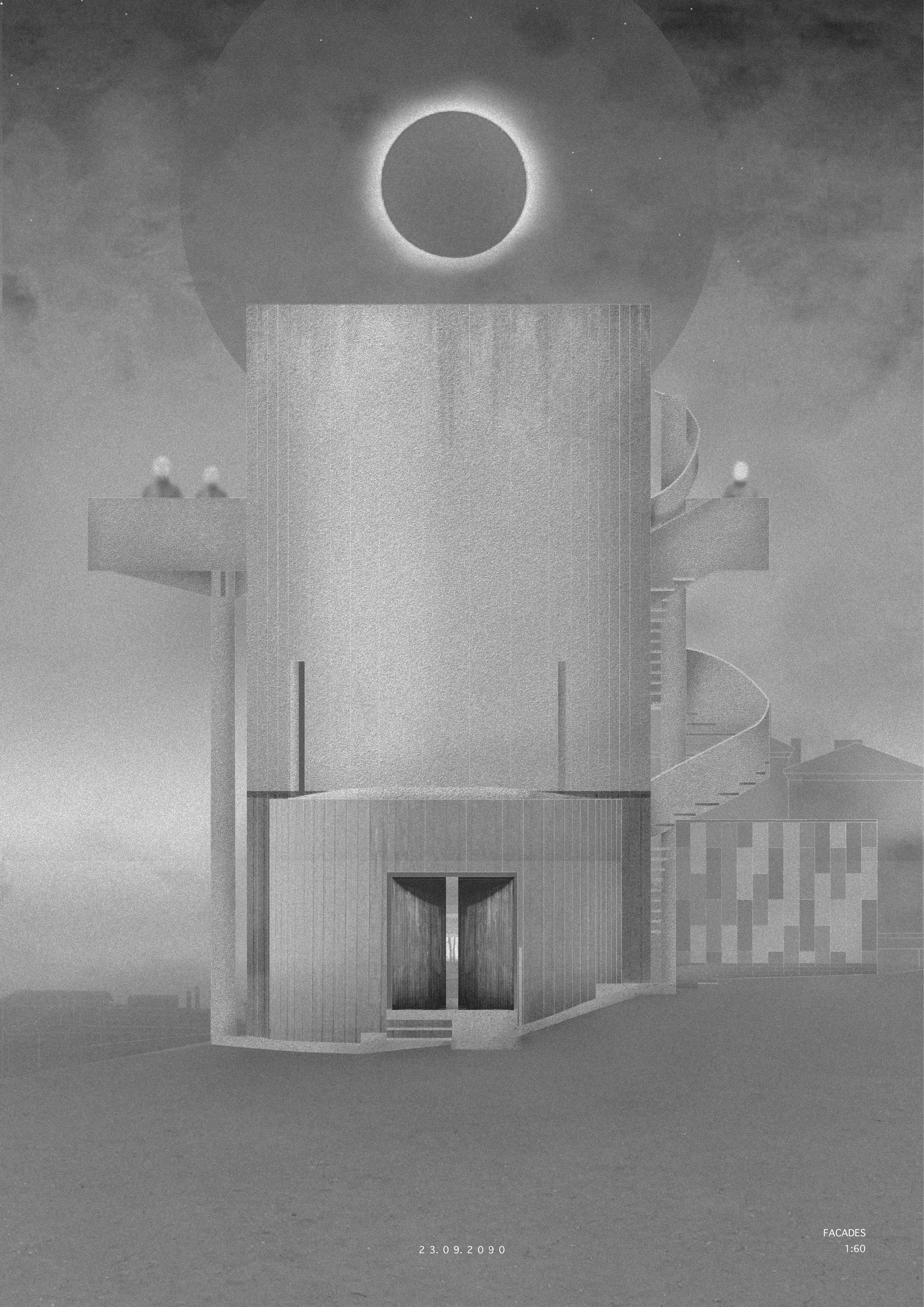 Back Elevation