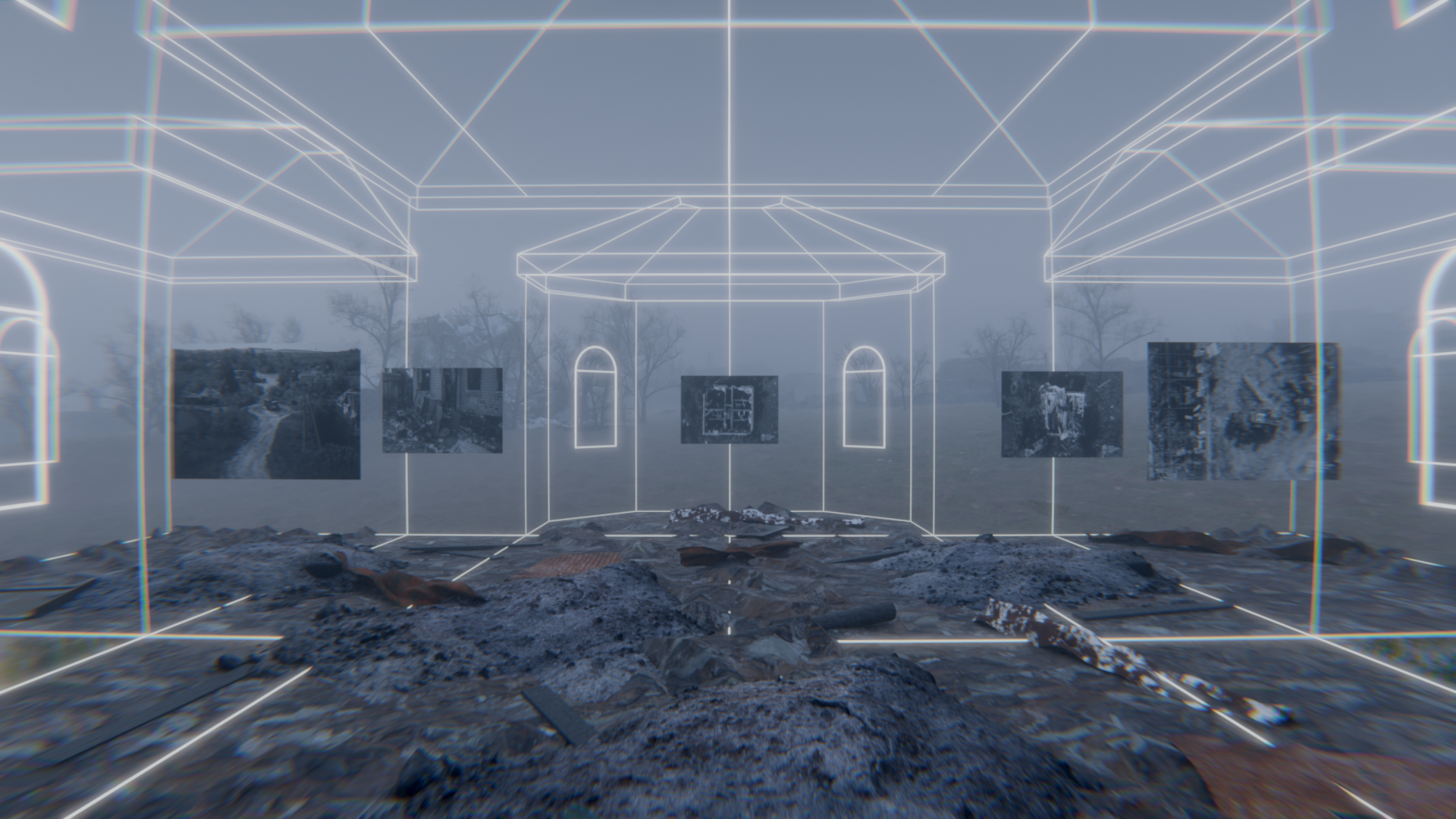
Architecture after war: testimony, return, and the lethal landscape.
Iron Steppe is a research-led speculative futures project developed within superFUTURES at the Royal College of Art, in collaboration with the UK Department for Environment, Food & Rural Affairs.
Responding to the studio brief through film, the project examines the long aftermath of war in Ukraine: mined land, damaged villages, veteran rehabilitation, displaced communities, and the uncertain process of return.
The work began with a question of global power. Research into microchip supply chains and military technologies led to a wider investigation of how contemporary warfare is built through extraction, production, sanctions, logistics, weapons, and reconstruction.
Set in post-war Ukraine, Iron Steppe imagines a future in which veterans return to contaminated land as deminers, technicians, artists, and witnesses. Through film, artefact, and digital reconstruction, the project asks what spatial practice can do before conventional rebuilding can begin.
Iron Steppe is structured around two central research questions:
How can architectural representation become a form of testimony in landscapes damaged by war?
What role can speculative storytelling play in imagining post-war recovery before recovery is fully possible?
The method emerged through the making of the project.
Research moved through documentary material, mapping, linear collage, moving image, satellite imagery, photographic alignment, Blender modelling, physical scanning, and artefact-making. These tools allowed the project to work between factual evidence and speculative narrative.
The process was influenced by Forensic Architecture, particularly the use of spatial tools to investigate damaged sites, reconstruct partial evidence, and make violence legible through architectural representation.
Iron Steppe works across three scales: global systems, territorial conditions, and intimate evidence.
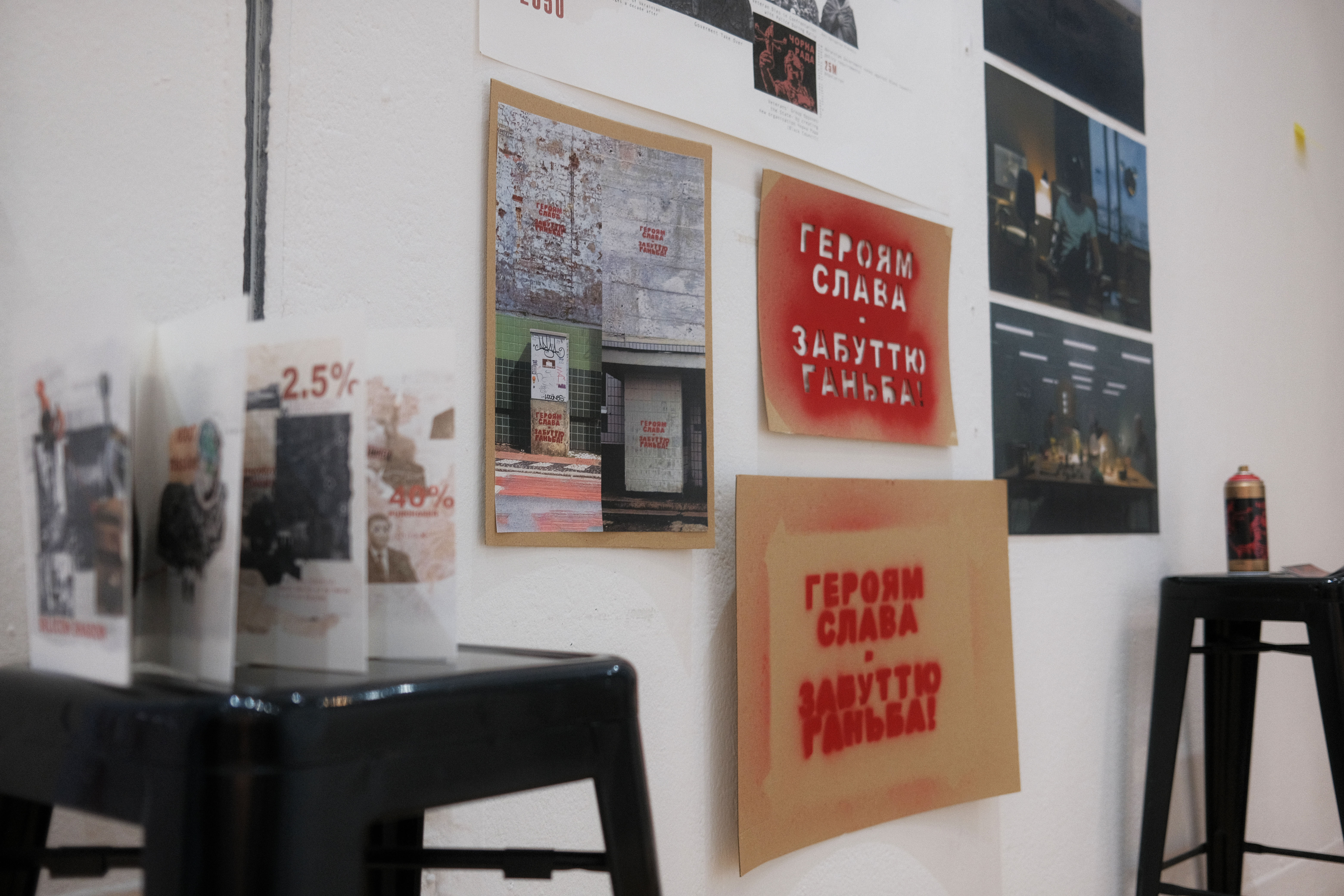
Supply chains, military technology, extraction, sanctions, and logistics.
Mined fields, damaged settlements, abandoned agriculture, and delayed return.
Ruins, objects, personal stories, and fragments of domestic life.
The film is the central output of Iron Steppe and the primary response to the superFUTURES brief.
Set in 2031, five years after the war ends, it follows Chorna Rada, a fictional veteran-led movement clearing Ukraine's contaminated land. The group operates without state funding, relying on donated equipment, improvised technologies, and collective labour.
The story takes place in and around Kamyanka, a village in Kharkiv Oblast occupied by Russian forces and heavily damaged during the war. Through drones, robotic scanning, digital mapping, and reconstructed architecture, the film imagines how veterans might become the first custodians of places too dangerous for ordinary return.
The future in Iron Steppe is speculative, but it is built from existing conditions.
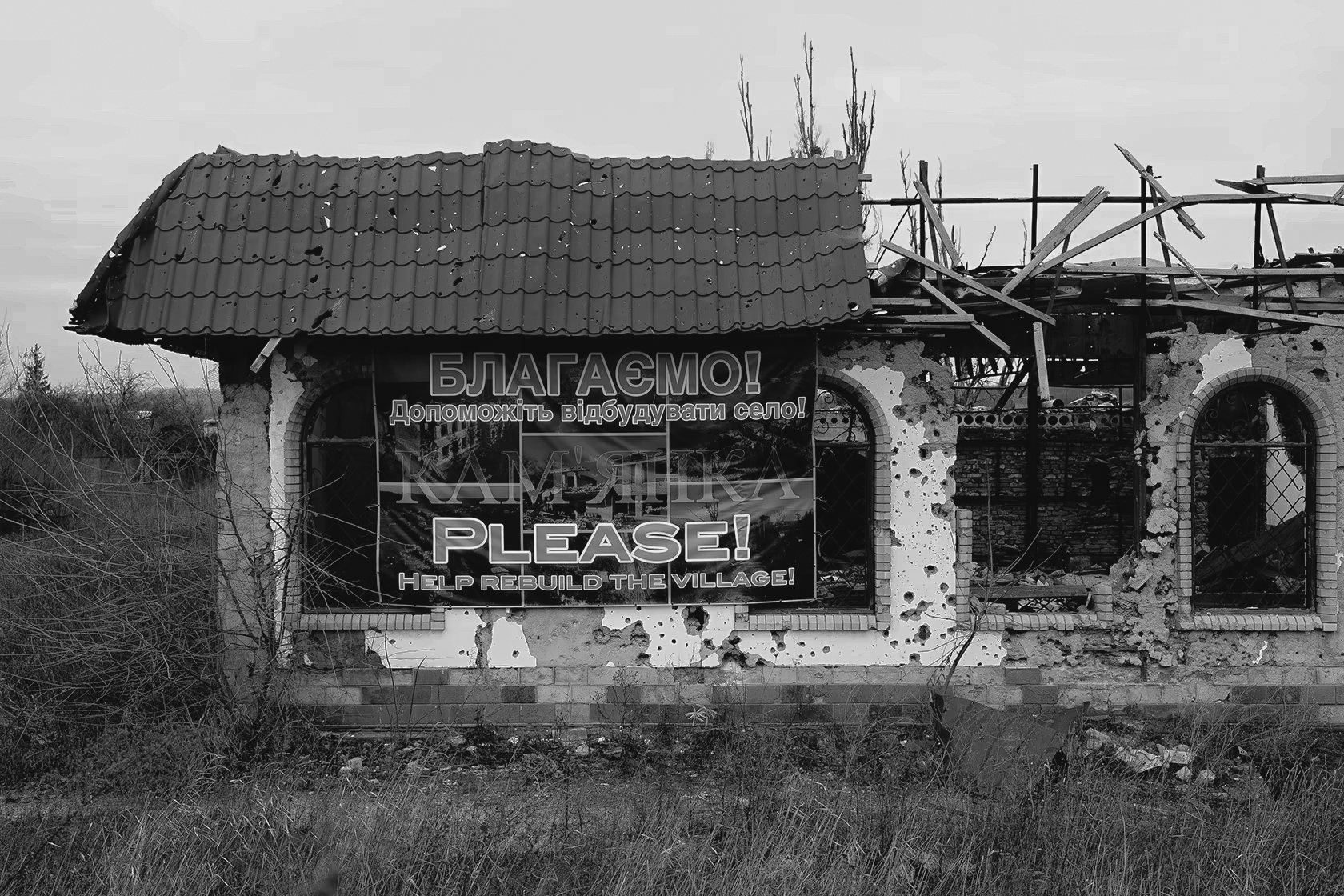
Kamyanka is a village in Kharkiv Oblast, Ukraine. Before the full-scale invasion, it was home to around 1,800 people.¹ During the war, the village was occupied by Russian forces and suffered extensive damage. After liberation, only a small number of residents returned. Reports from the area describe destroyed buildings, damaged infrastructure, landmine contamination, unexploded ordnance, and civilian casualties caused by explosive remnants.²
Kamyanka was selected as a case study because it represents one of many small Ukrainian villages that have been severely damaged, depopulated, and left difficult to return to. While state-led reconstruction programs often prioritise larger cities and densely populated areas, smaller villages are more likely to rely on residents, volunteers, and informal networks to begin recovery themselves.
In Iron Steppe, Kamyanka becomes a way to examine what reconstruction means at the scale of the village.
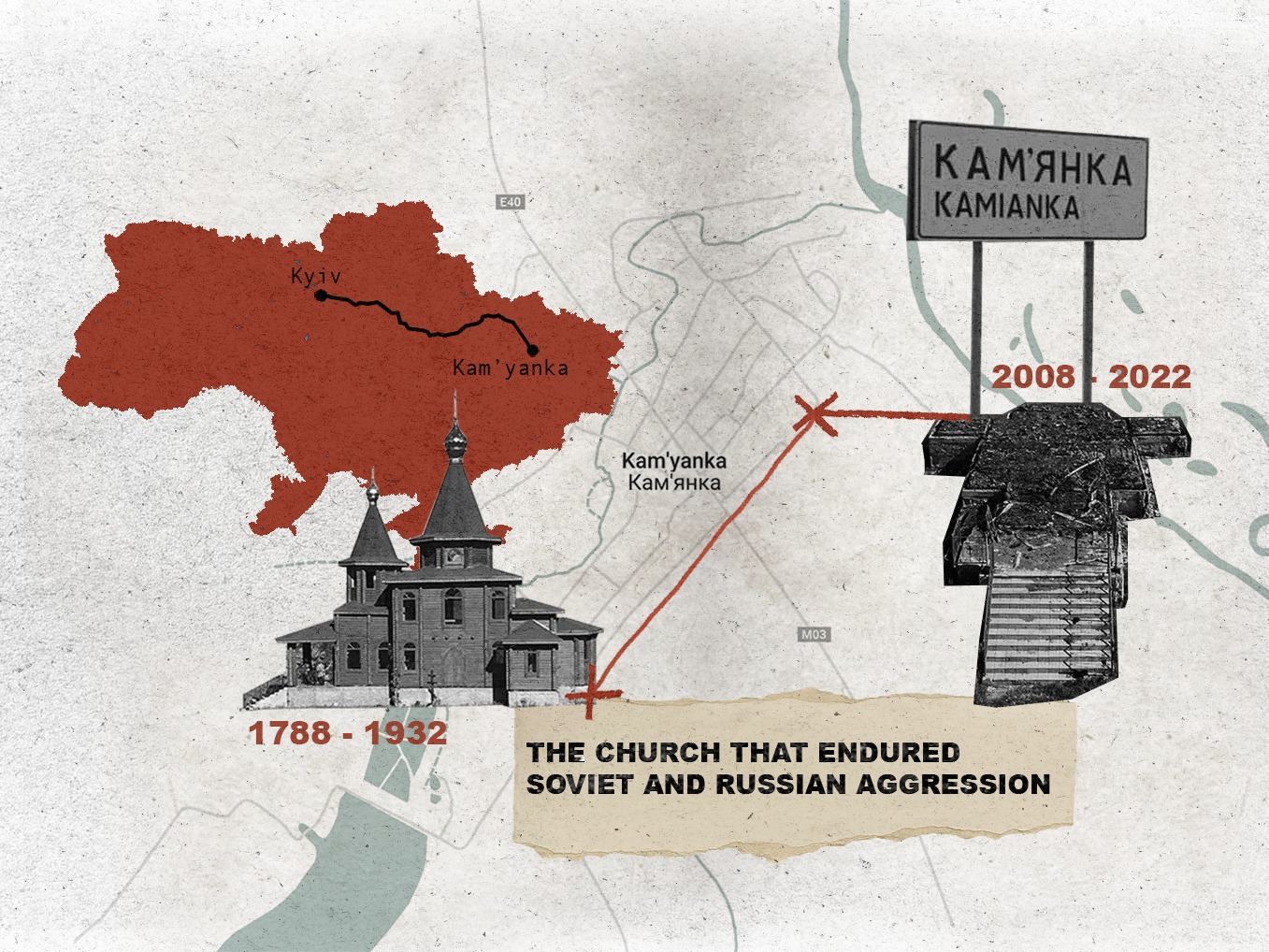
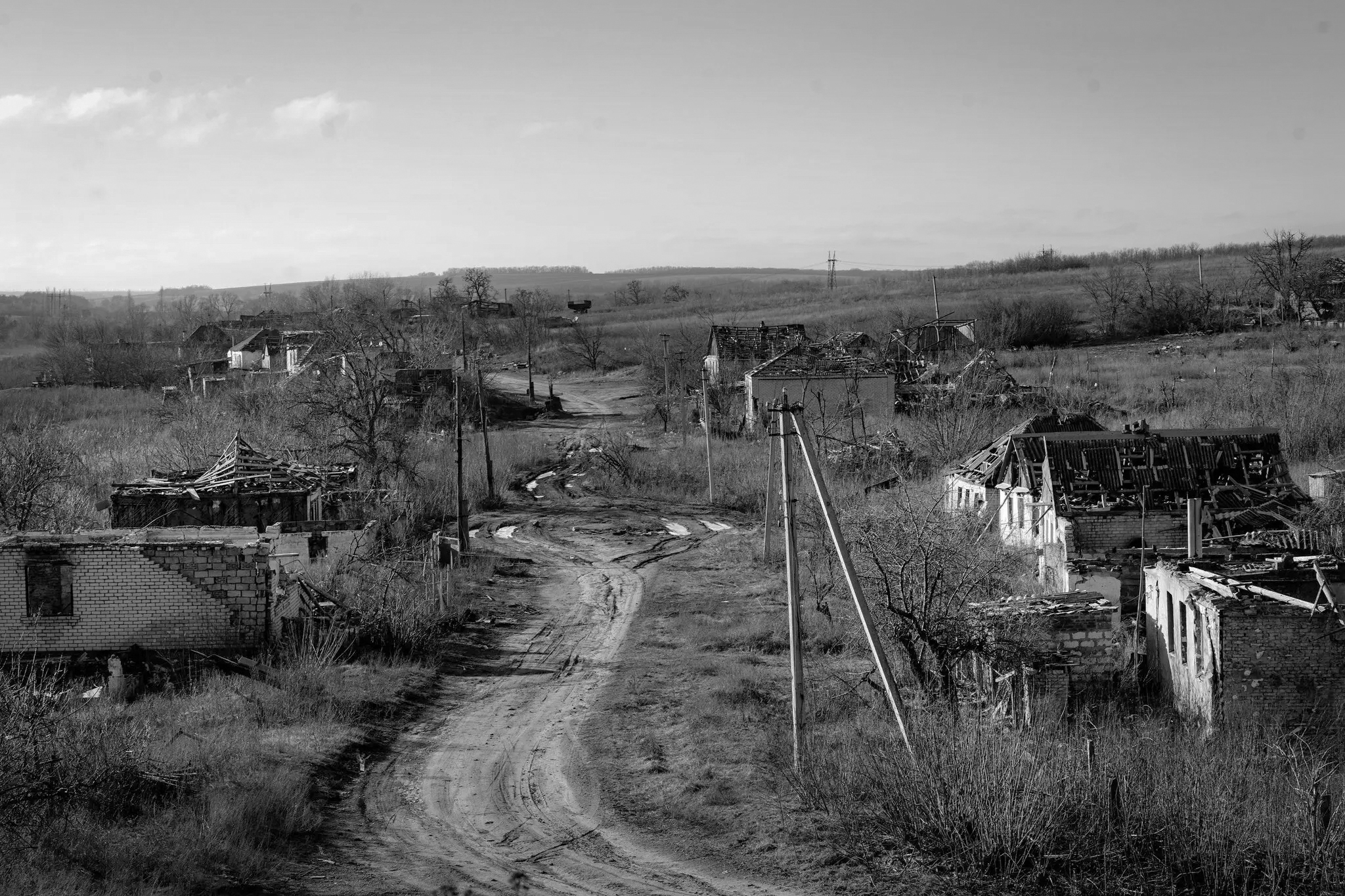
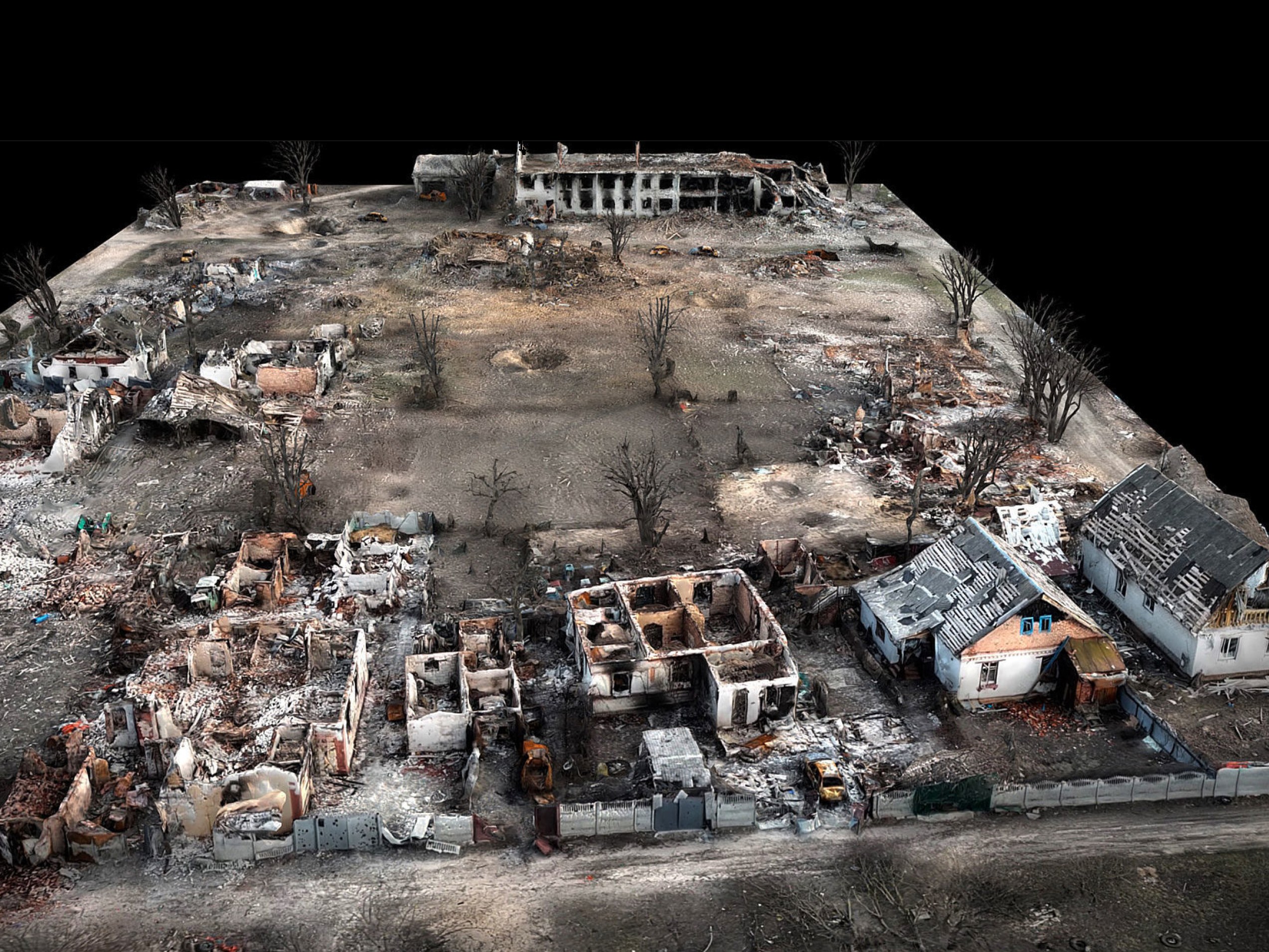
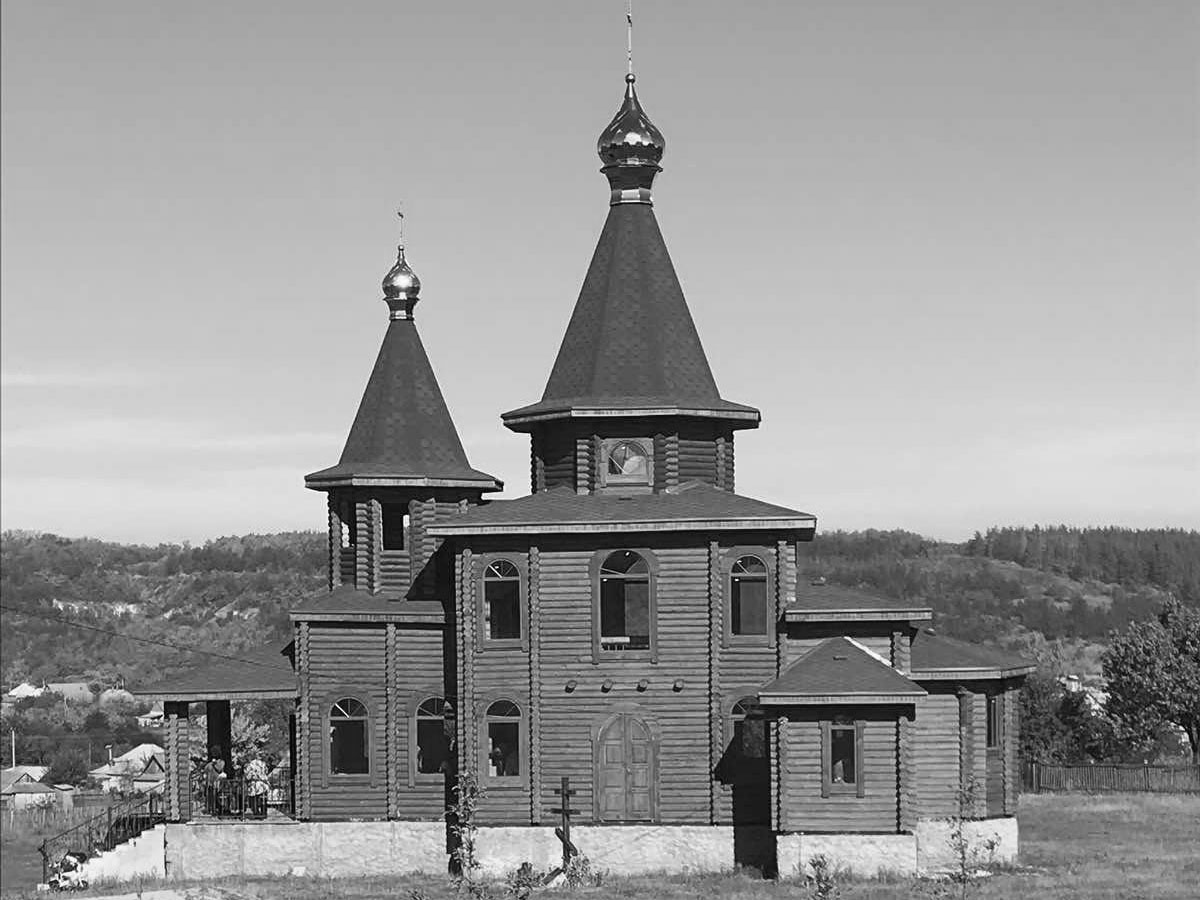
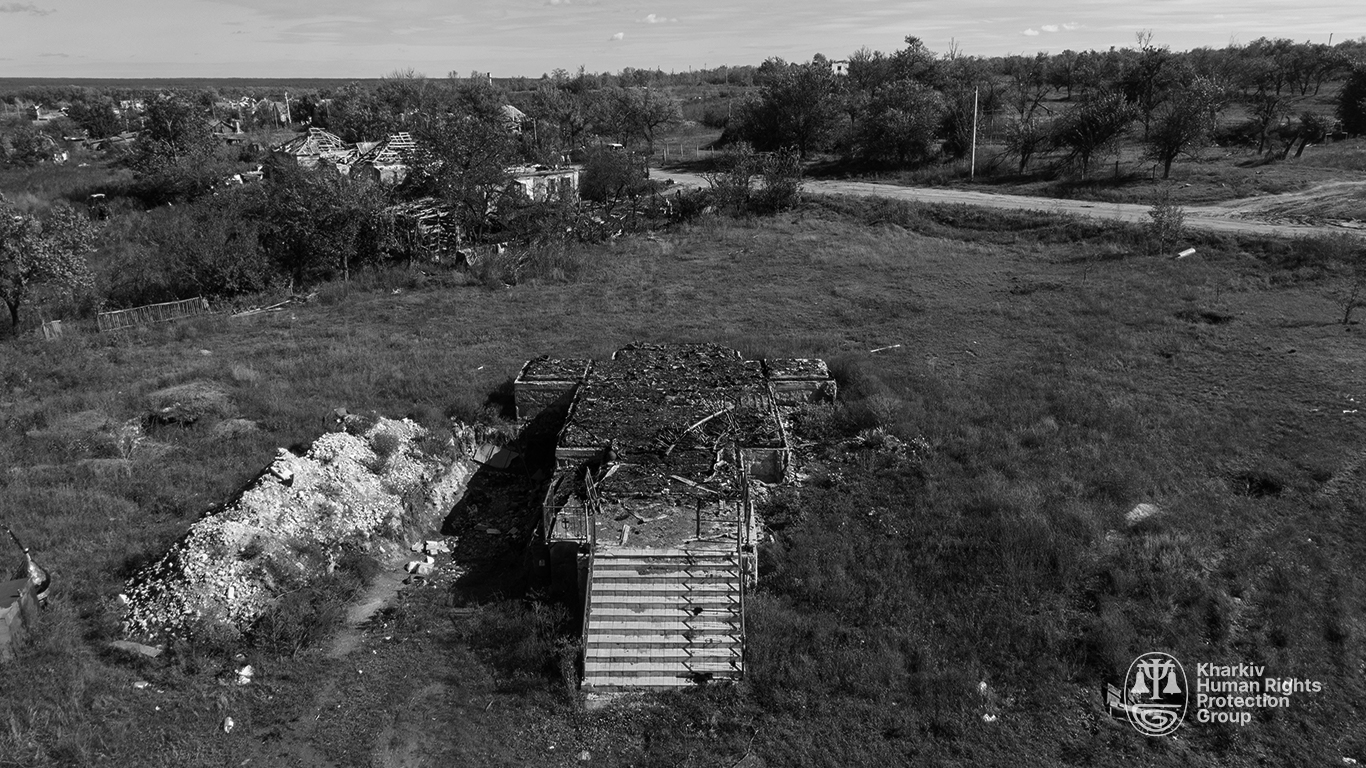
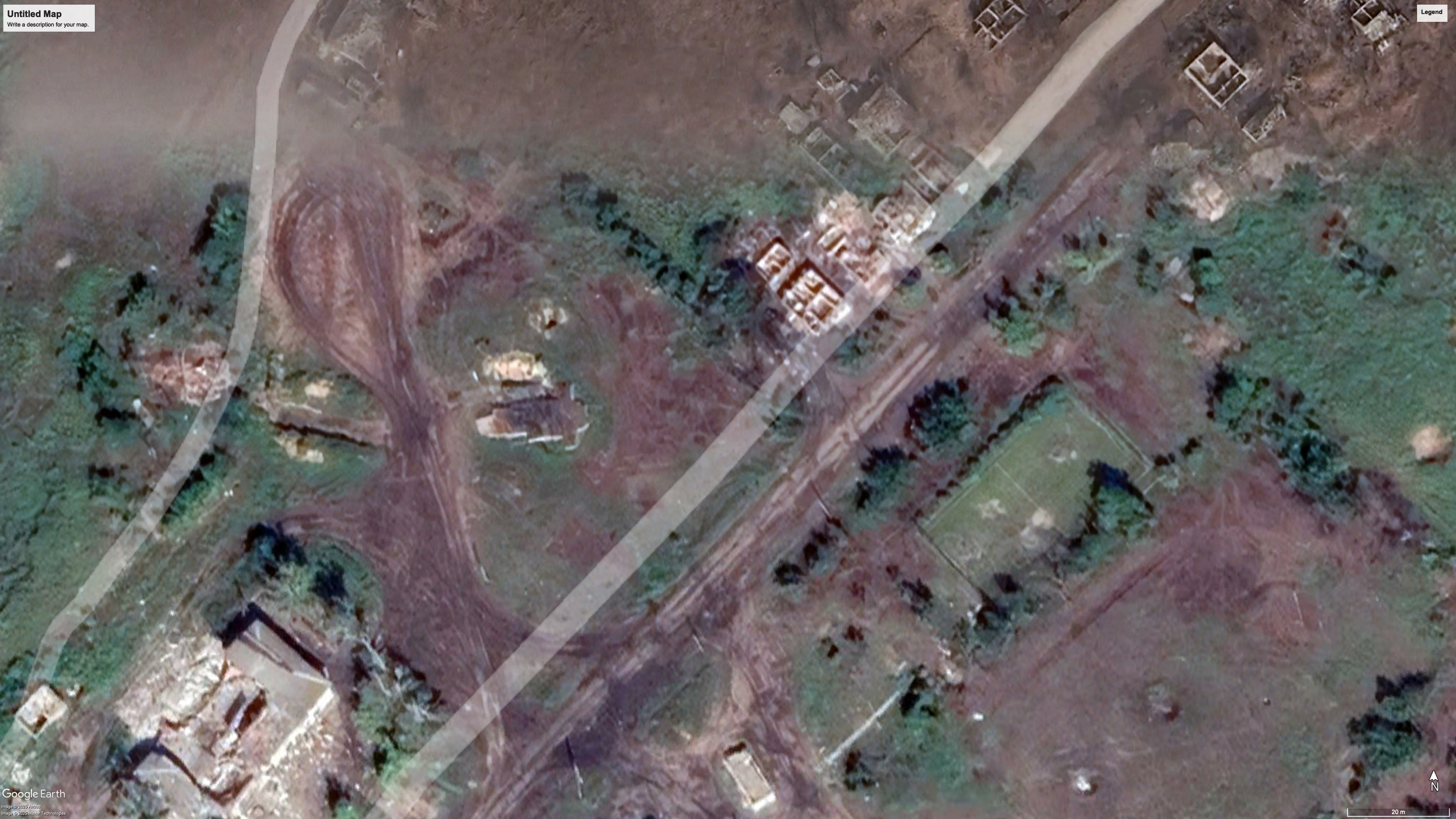
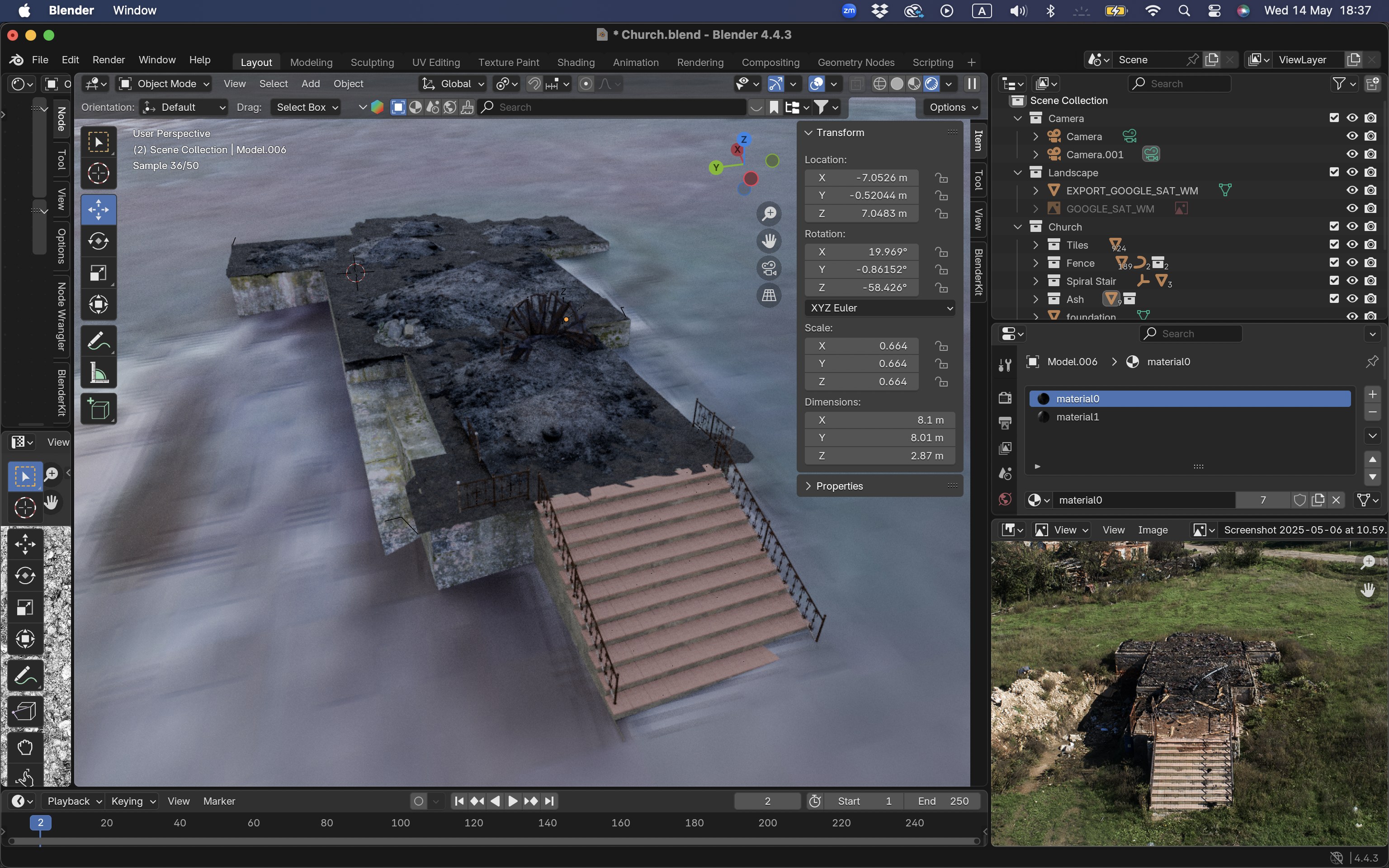
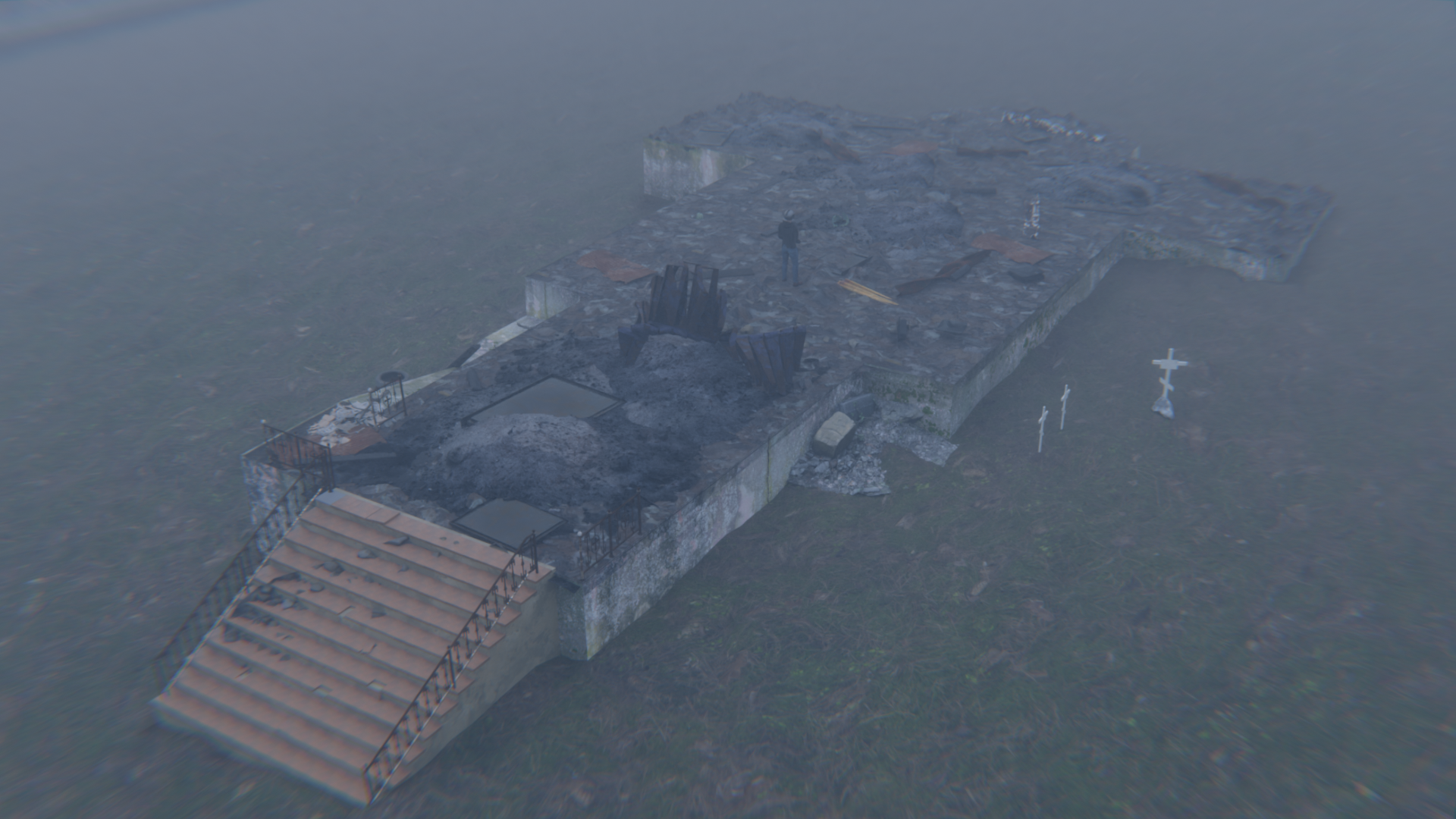
The ruined church in Kamyanka became the project's main architectural reconstruction study.
Built in 1831 by retired Colonel Ivan Malinovsky, the church was modelled on the Cathedral of the Ascension in Sofia. It functioned until 1919, was destroyed by Soviet forces in 1932, later rebuilt with memorial crosses honouring its founders, and was destroyed again during Russia's full-scale invasion of Ukraine.³
The church carries several histories in one structure: imperial influence, Soviet destruction, local commemoration, and contemporary war.
The reconstruction process used before-and-after photographs, Google Maps terrain data, and available site imagery. These references were aligned in Blender to estimate the church's scale, volume, and position. The model is not presented as a perfect reconstruction. It is a working reconstruction made from limited evidence.
The aim was not to visually restore the church, but to test how architectural tools can record what remains when a site is damaged, inaccessible, or only partially documented.⁴
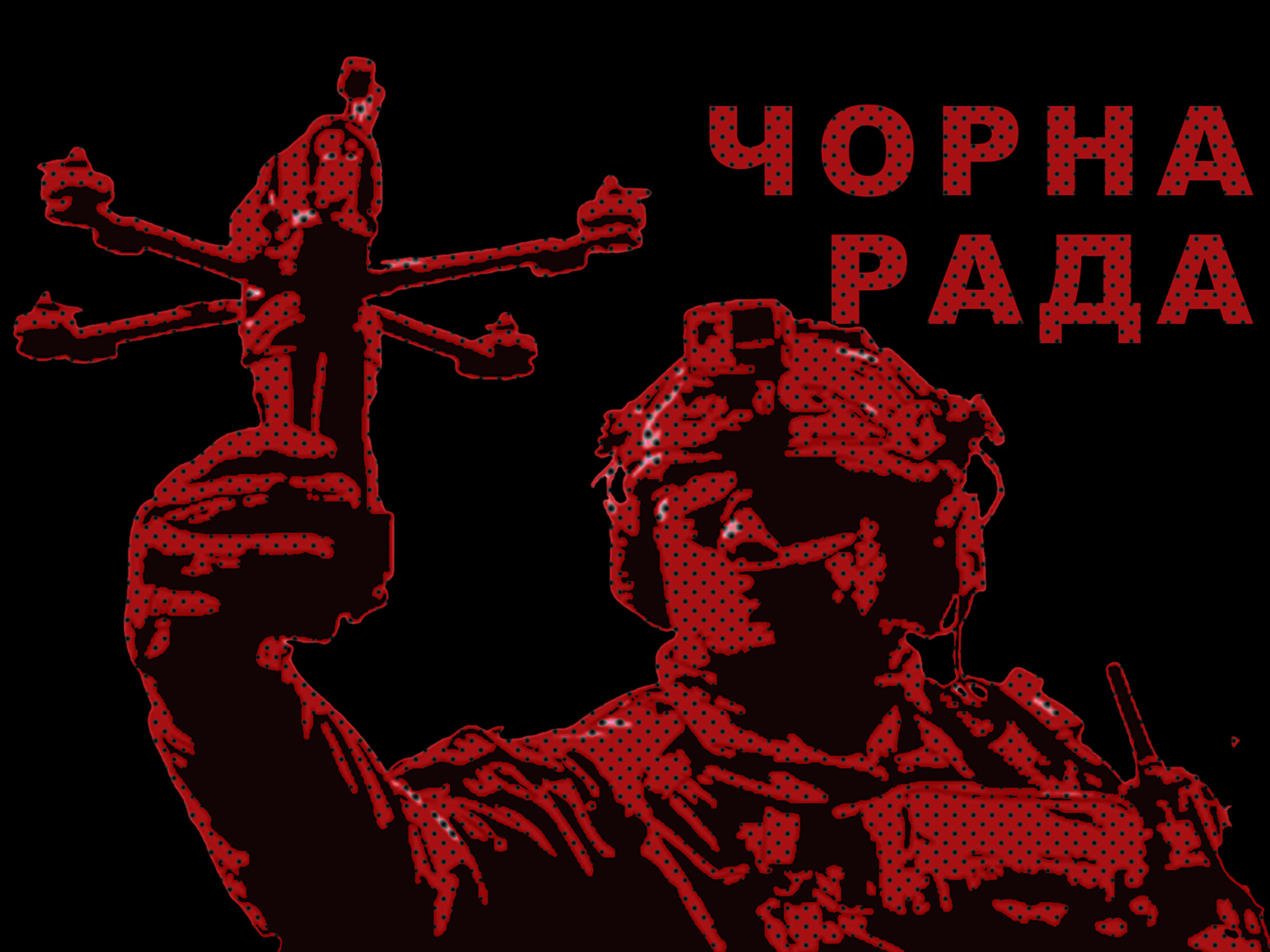
Chorna Rada is a fictional volunteer movement made up of veterans, engineers, drone pilots, artists, and displaced civilians.
The group emerged from a real post-war question: what happens to military knowledge after the war ends?
In Iron Steppe, veterans are not shown only through loss or heroism. Their skills are redirected toward demining, scanning, mapping, repairing equipment, and documenting damaged places.
Chorna Rada operates outside formal institutions. It represents an improvised form of civic repair: underfunded, technically skilled, and driven by responsibility rather than authority.
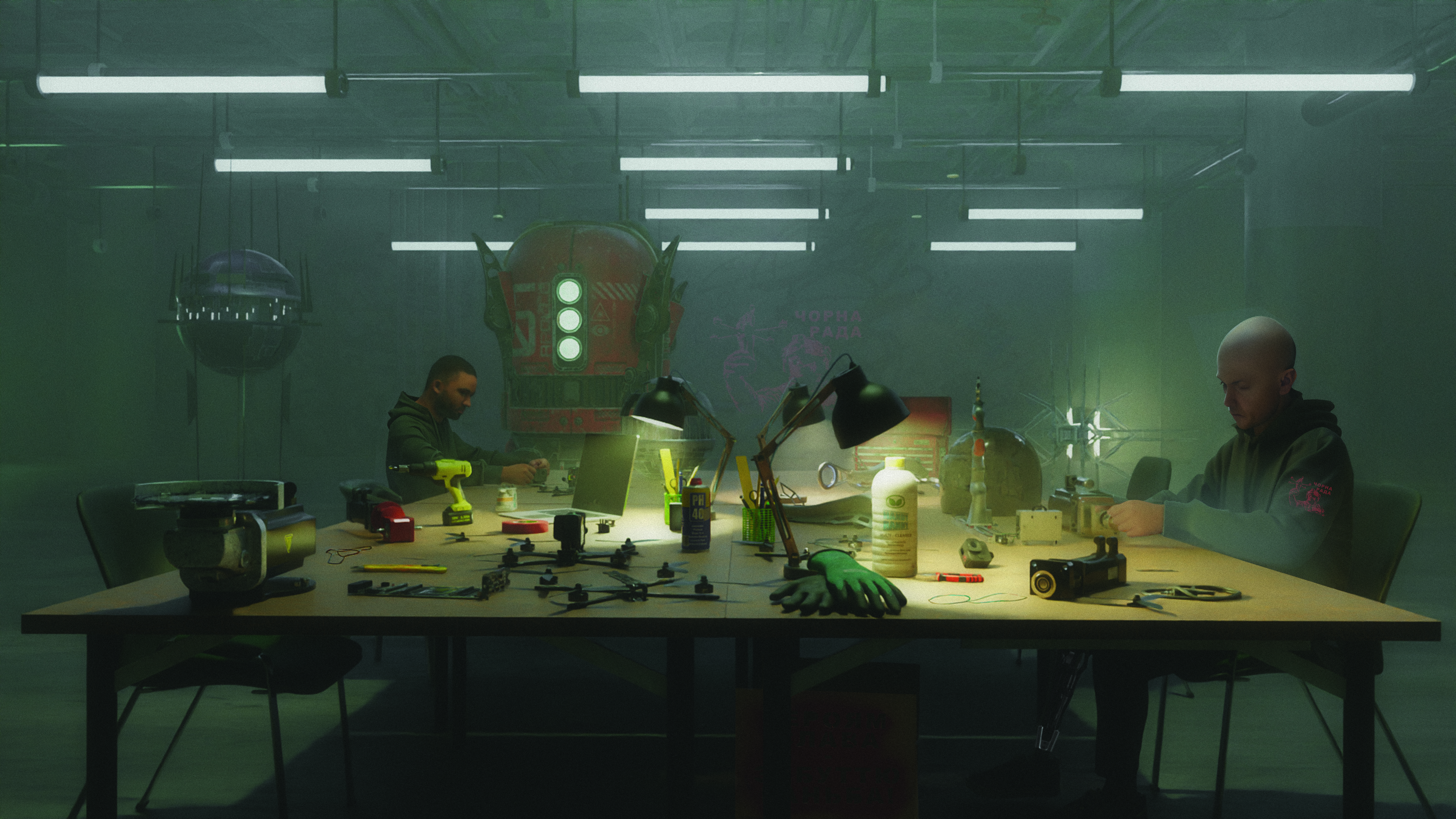
The three central characters each carry a different part of the project.
Buryi is the leader of the demining team. He represents discipline, responsibility, and the pressure of keeping others alive in a dangerous landscape.
Diesel is a former mechanic and soldier who served as a drone pilot during the war. After surviving a severe injury that resulted in the loss of his arm and one eye, he continues to use his technical skills within Chorna Rada, operating drones and robotic systems to scan contaminated land and support demining work. His character explores rehabilitation and adaptation.
Picasso is an artist and former soldier who turns fragments of abandoned towns into digital memorials. Through him, documentation becomes a cultural act.
The research began with the global systems that enable contemporary warfare. The project traced the microchip supply chain from raw material extraction and fabrication to trade routes, sanctions loopholes, military technologies, and weapons systems.⁵
This research examined war as something produced through networks: materials, labour, logistics, technology, profit, and political evasion. The aim was to understand how small components move through global economies before becoming part of the machinery of violence.
The research was first developed through Landscape, a linear collage drawing made as a concertina-folded booklet. The drawing mapped the supply chain across different scales and was designed to unfold like the systems it described.
It then developed into Silicon Shadow, a short research film using moving image, narration, and montage to trace the same network through time, movement, and consequence.

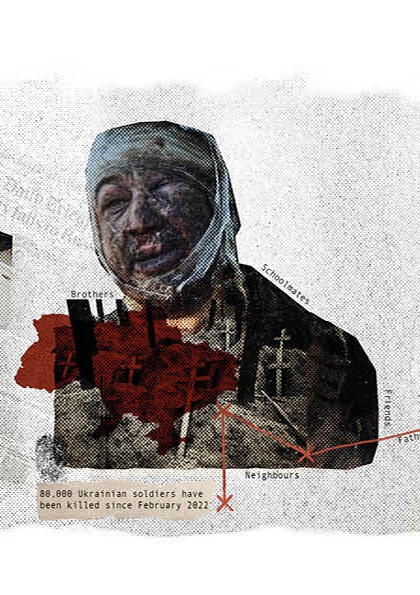
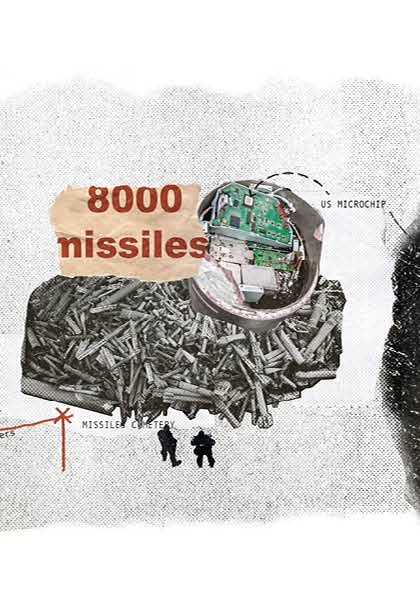
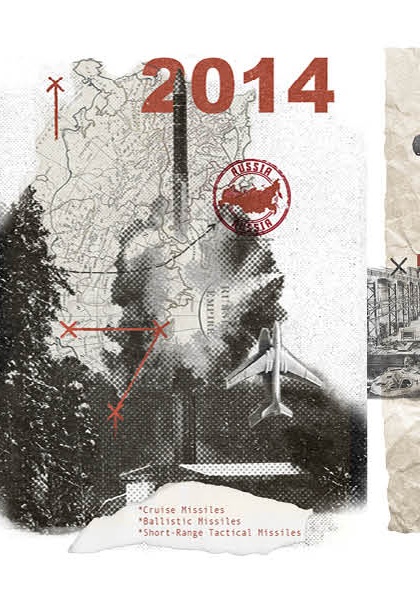



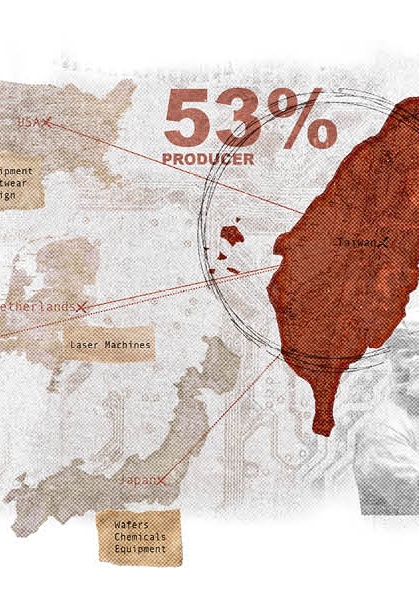




Silicon Shadow — research film tracing the same system through moving image.

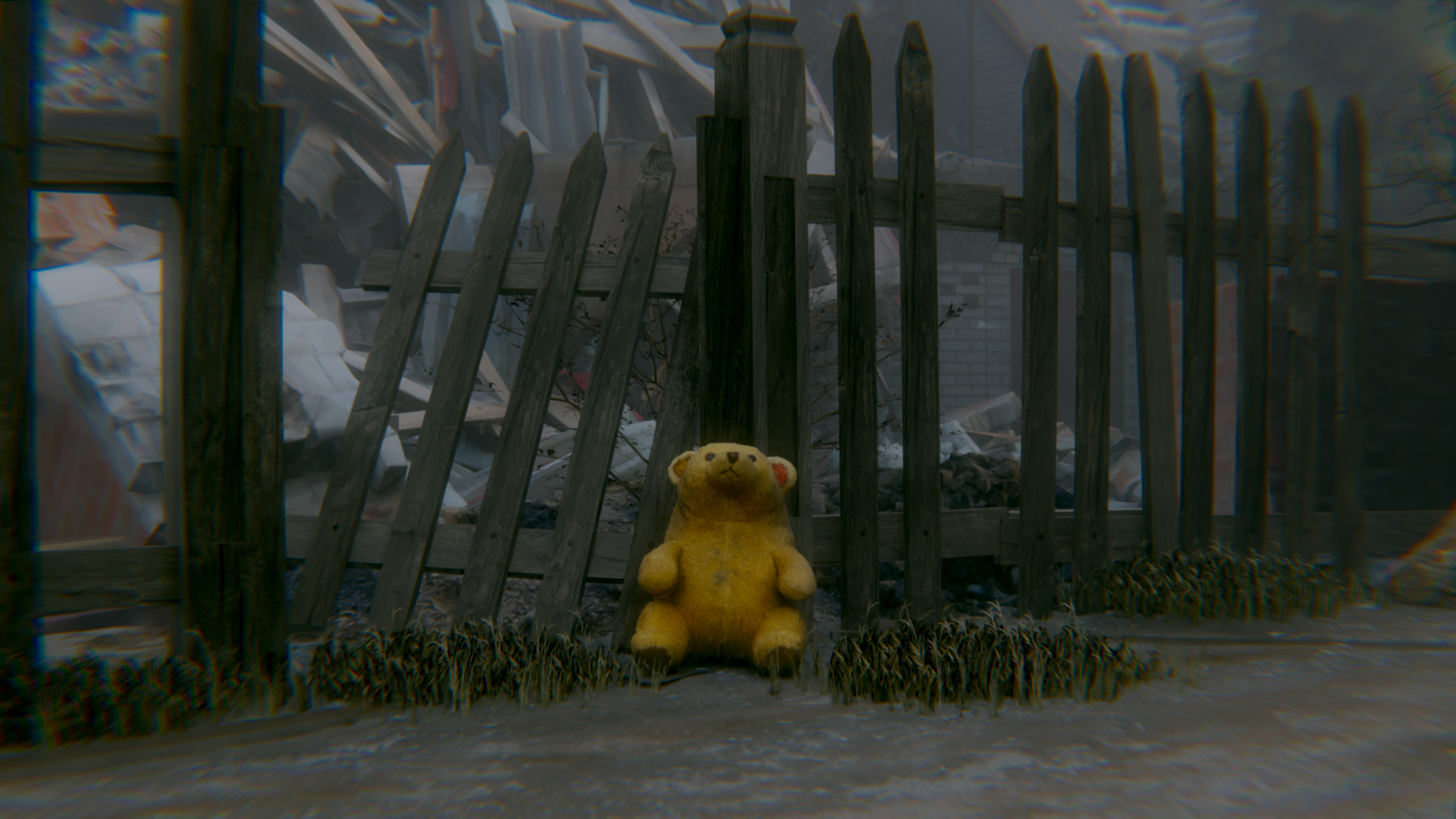
Buba is a physical artefact that exists both as an exhibition object and as a digital 3D scanned prop.
The object is a soft toy modelled from real footage of a teddy bear reportedly found with an explosive device hidden inside. In Iron Steppe, Buba becomes a warning object: familiar, childlike, and unsafe.
The artefact was scanned, rebuilt digitally in Blender, and placed inside the film. It moves between physical prop, digital model, and narrative device.
When activated, Buba plays a recorded warning message: "Hello, friend... I was left behind, just like many others. But not all toys are safe to hold. Sometimes, explosive traps are placed in toys, in everyday objects, waiting for someone to pick them up."
In the film, Buba is discovered by a robotic dog scanning the ruins of Kamyanka and marked as "Code Danger."
Buba brings the project down to the scale of touch. It shows how war changes the meaning of ordinary objects.

Iron Steppe is the beginning of a larger practice-led research trajectory.
The next stage proposes fieldwork in a war-affected village in Ukraine, involving the documentation of damaged architecture, the collection of personal testimonies, and 3D scanning of buildings, objects, and spatial fragments that remain.
This research would form the basis for a digital platform and a series of physical spatial experiences: places of memory where stories, scans, images, and fragments can be brought together, preserved, and shared.
The ambition is to develop Iron Steppe as an ongoing archive of post-war memory — one that does not only look back at what has been lost, but helps inform how communities rebuild, remember, and move forward.